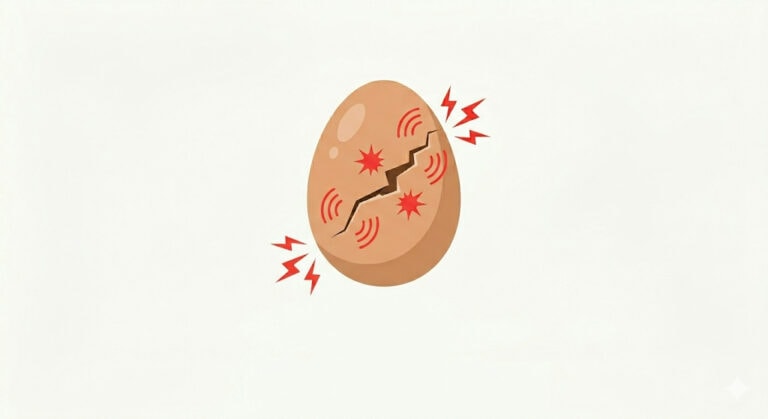
Why “Just Do Kegels” Might Be Making Your Symptoms Worse (And What to Do Instead)

You’ve probably heard it a thousand times. From magazines, well-meaning friends, or even your doctor at your 6-week checkup: “If you want to stop leaking, you just need to do your Kegels.”
So, you do them. You squeeze while you’re driving, while you’re nursing, or while you’re watching TV.
But months later, you’re still leaking. Or maybe you’re noticing a feeling of heaviness, pelvic pain, or discomfort that wasn’t there before.
I want you to know something important: It is not your fault, and you are not broken. The advice to “just do Kegels” is often outdated and can actually be counterproductive for many women.
The “Tightness” Trap
Here is the secret that generic advice misses: A muscle cannot get stronger if it is already exhausted from holding on too tight.
Imagine you spent all day walking around with your bicep flexed and your fist clenched. If someone handed you a heavy weight and told you to “curl it,” you wouldn’t have the range of motion or the strength to do it well. Your arm is already tired!
The same thing happens to your pelvic floor.
In the Occupational Therapy world, we call this a Hypertonic Pelvic Floor. This means the muscles are “high tone” or too tight. If you keep doing Kegels (contracting) on top of that tightness, you are just increasing the tension, which can lead to more leaking, pain with intercourse, and pelvic pressure.
It’s Not Just a Muscle Problem—It’s a Nervous System Problem
Your pelvic floor doesn’t exist in a vacuum. It is deeply connected to your nervous system and your stress response.
When we are stressed, rushing, or living in “fight or flight” mode (which, let’s be honest, is the default state for many new moms), our body naturally guards itself. Some people clench their jaw; others hike up their shoulders. Many of us clench our pelvic floor without even realizing it.
If your nervous system is constantly sounding the alarm, your pelvic floor will stay tight and guarded. That’s why at OC Pelvic Wellness, we don’t just look at your pelvis. We look at you.
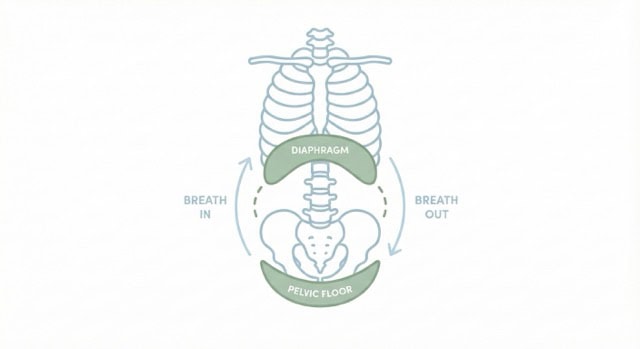
We look at how you breathe, how you hold your baby, and how your nervous system is regulating. Because often, the key to dryness isn’t squeezing harder—it’s learning how to finally let go.
The Difference of a Whole-Body Approach
This is why the “assembly line” model of therapy often fails women. Handing you a sheet of generic exercises and sending you on your way ignores the complexity of your body and your life.
In our one-on-one sessions, we have the luxury of time. We can:
- Assess if you are actually bearing down when you think you are squeezing.
- Work on breathwork to down-regulate your nervous system.
- Use manual therapy to gently release tight tissue.
- Look at your daily movements—like how you lift the car seat or rock your baby—to find where the tension is coming from.
If you’ve been doing Kegels diligently with no results, or if you feel pain and tension in your pelvis, it might be time to stop squeezing and start assessing.
You deserve care that looks at the whole picture—your muscles, your nervous system, and your life as a mom.